Brazil backs Global Council’s call for urgent action to tackle dangerous inequalities that limit pandemic responses
18 DECEMBER 2025, BRASILIA
The Government of Brazil has welcomed a call by the Global Council on Inequality, AIDS and Pandemics for urgent action to tackle dangerous inequalities that undermine pandemic responses.
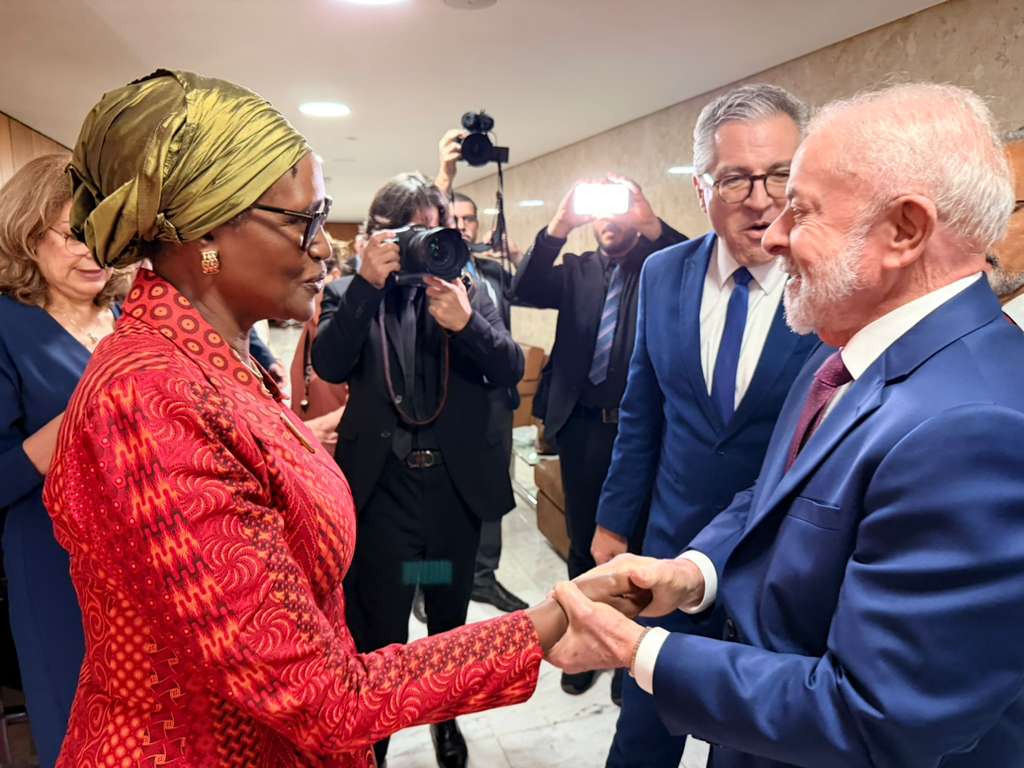
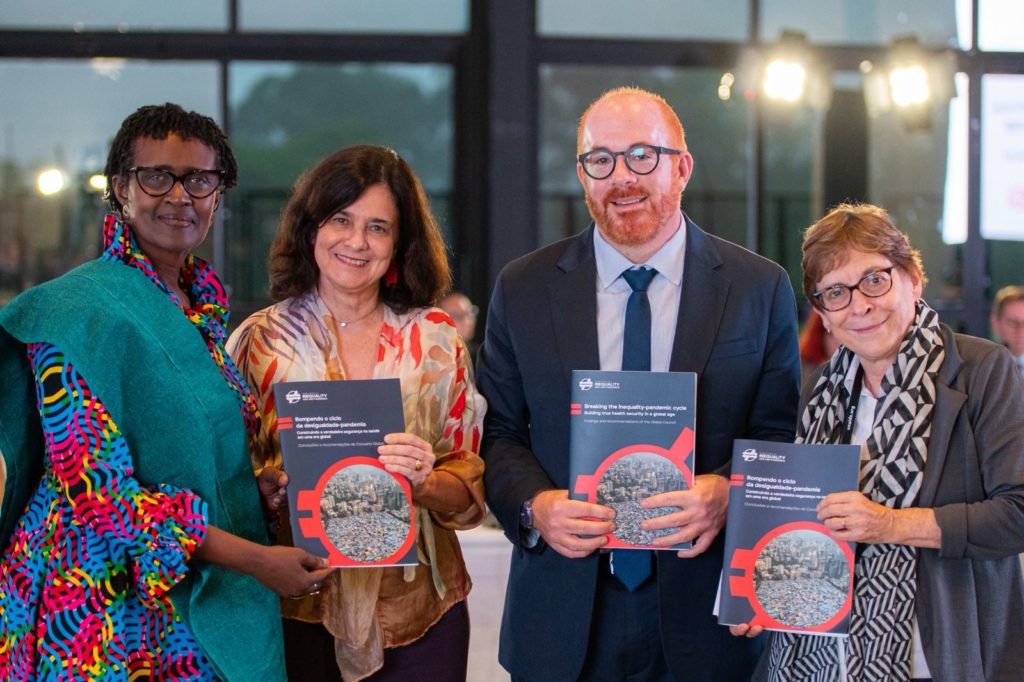
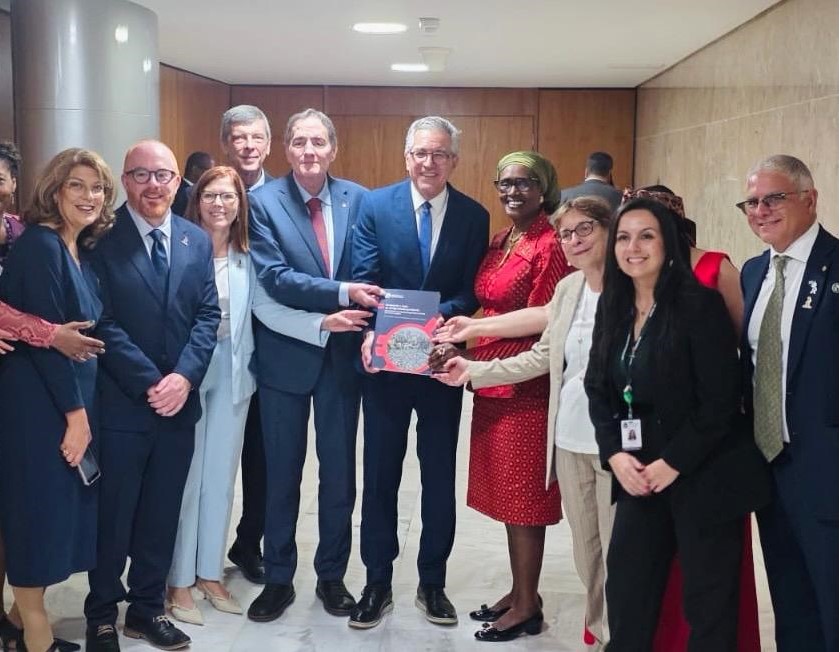
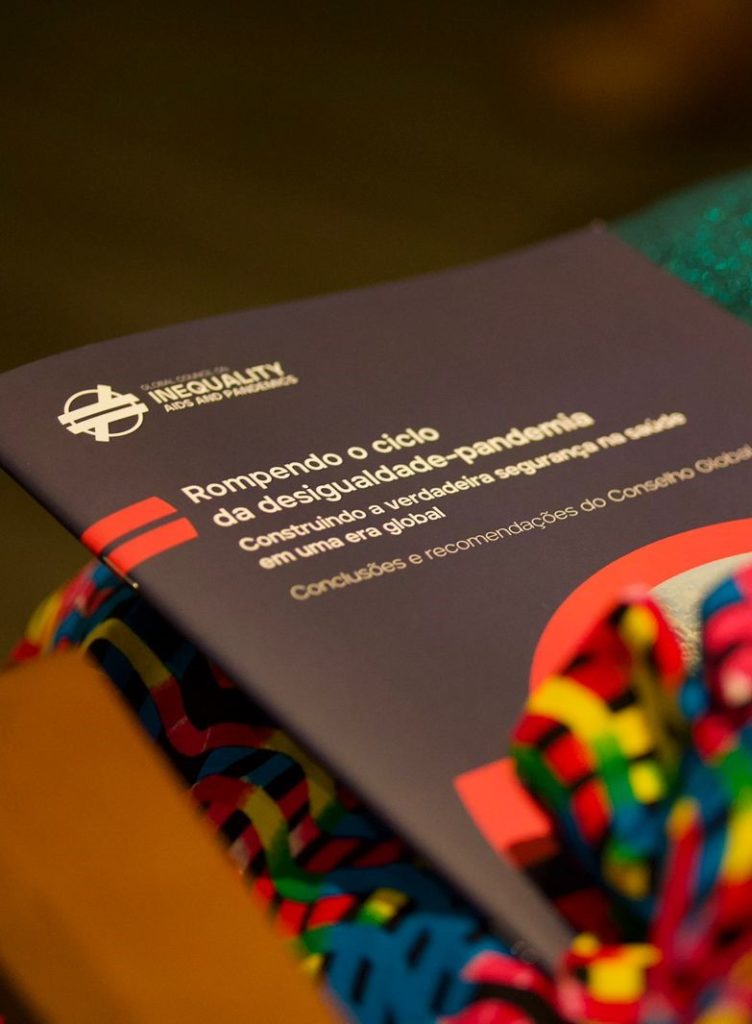
Brazil’s Minister of Health Alexandre Padilha met with Council members after the launch of a Portuguese-language version of the report, Breaking the inequality–pandemic cycle: Building true health security in a global age in Brazil’s capital, Brasilia.
At the 17 December launch event, Mariangela Simão, Brazil’s Secretary of Health and Environmental Surveillance, welcomed the Global Council’s findings and its call to action.
“Tackling inequalities is not only the right thing to do. It is essential for enabling the world to respond effectively to pandemics,” Simão said. “We welcome the Global Council’s powerful research findings and its practical and implementable recommendations.”
Founding Council member Nisia Trindade, a former Minister of Health of Brazil who is now at the Oswaldo Cruz Foundation, led a presentation of the Council report, which is the result of more than two years of research by a multidisciplinary group of experts.
The Council’s work has revealed an inequality–pandemic cycle: inequality is making pandemics more disruptive, deadly, and longer; and pandemics, in turn, have an outsized impact on the vulnerable and marginalized, which increases inequality.
Dr Trindade stressed that there are specific drivers of the inequality–pandemic cycle, as well as evidence-informed ways to break the cycle.
“The Global Council has identified practical steps to address the inequalities that are slowing biomedical responses and prolonging pandemics,” Trindade said. “We must work together to remove financing barriers to robust pandemic responses; we must address the social determinants that create vulnerability to pandemics; we must ensure that new vaccines and medicines are treated as global public goods during pandemics and quickly produced all over the world; and we must build greater trust, equality and efficiency in pandemic response by building responses that include multiple sectors, not just ministries of health, and include the strong participation of communities.”
The Council event was held during a meeting of the UNAIDS Programme Coordinating Board The UNAIDS board brings together governments, civil society and United Nations agencies to lead the global effort to end AIDS as a public health threat.
The report notes that there were millions of avoidable deaths during the AIDS and COVID-19 pandemics because innovative medicines, vaccines and other health technologies were slow to reach the Global South.
Simão said “the report comes at the right time”, as countries negotiate how to share data on pathogens with pandemic potential and the health technologies that are developed with those data.
“The question is, have we learned anything? Because we saw the same thing that happened during HIV happened again during the COVID pandemic,” Simão said. “This type of report that brings data and has a lot of reflections, it has to resonate on the politics of health.”
UNAIDS Executive Director and UN Undersecretary-General Winnie Byanyima, who convened the Council in June 2023, praised Brazil as a source of hope.
“Brazil is an innovative leader of the AIDS response,” remarked Ms Byanyima. “Brazil is now chairing the UNAIDS board at a pivotal moment for the global AIDS response and for the UN’s role within that response. And Brazil is a leader in global efforts to prepare for future pandemics. Brazil is showing that a safer, more equal world can be won.”
Matthew Kavanagh, Director, Georgetown Center for Global Health Policy and Politics, and a member of the Global Council, shared how Brazil’s leadership on tackling inequality and pandemics is opening up the possibility for transformative policy shifts worldwide.
“Momentum is continuing to build internationally,” said Dr Kavanagh. “Brazil’s support for the Council findings and proposals, alongside the support from South Africa at the G20 last month, demonstrate that the Council’s set of proven concrete policy proposals can be realized. The Global Council is delighted to be working side-by-side with Brazil to advance our shared goals. It is because of pioneering leaders like Brazil that a global consensus is building that it is not only essential to tackle dangerous inequalities – it is achievable.”