Global security threatened by inequality-pandemic cycle, warn experts addressing Chatham House
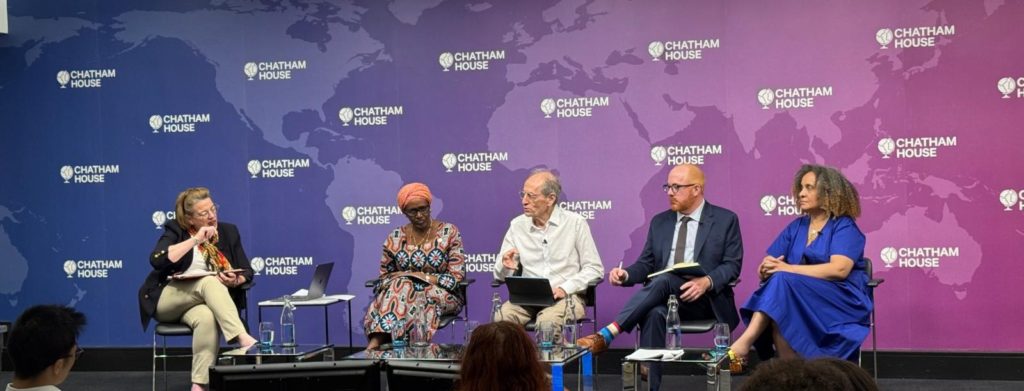
Inequalities are driving pandemics, and failure to tackle them is leaving the world unsafe, experts have warned at a discussion at the international affairs think tank Chatham House in London.
Experts from the Global Council on Inequality, AIDS and Pandemics shared the findings of their systematic analysis which has revealed how inequality within and between countries drives outbreaks to escalate into pandemics and worsens their impact, and how this in turn further widens inequalities.
“During the COVID pandemic, we saw what science could deliver in one year: the vaccines,” explained Winnie Byanyima, UNAIDS Executive Director and Convenor of the Global Council. “Then we saw how inequality prevented the world from having access to this lifesaving vaccine: we saw a pandemic prolonged, kill more people sink more economies, because of inequality. We set up a multi-disciplinary council who over two years looked at more than 1,500 studies and came up with new analysis that there is a cyclical self-reinforcing relationship between inequality and pandemics.”
“Governments in many countries found themselves shocked and surprised by the impact of inequality on COVID deaths,” said Michael Marmot, Professor of Epidemiology and Director of the Institute of Health Equity, University College London, and Co-Chair of the Global Council. “Our analysis can help countries not only to understand the inequality-pandemic cycle but to overcome it. Learning from the experience of AIDS, COVID, and from other pandemics, governments need to invest in the social determinants of health, the conditions in which people are born, grow, live, work, and age. They need to address the global financial architecture and intellectual property restrictions which are currently exacerbating inequality between countries and hampering pandemic preparedness and response. And they need to empower communities.”
“The standard measures on pandemic preparedness did not predict how well countries would respond to COVID,” said Matthew Kavanagh, Director of Georgetown University’s Center for Global Health Policy & Politics and member of the Global Council. “What did predict countries’ response, across pandemics, is how they had dealt with inequality. The inequality-pandemic cycle is a threat to global prosperity and security. The international community needs to recognise and address inequality as a systemic risk.”
“Recent aid cuts, along with the current surge in intolerance driven by the global far-right, are dangerously exacerbating inequalities. We stand at the precipice of losing the progress made against pandemics,” said Susan Cole, Co-Founder and Executive Director, Phoenix Health Movement. “People who face intersecting forms of stigma, discrimination, and disadvantage are the hardest hit in pandemics, so involvement, especially by the most marginalised communities, is crucial in every aspect of the response to ensure that pandemics can be overcome.”
“For anyone concerned with global security,” concluded Emma Ross, Global Health Programme Director at Chatham House, “the inequality-pandemic cycle is not a peripheral concern. It goes to the heart of how we think about preparedness, resilience, and the international order itself. A world that tolerates deep inequality is a world that remains vulnerable to the next shock. By placing structural inequality at the centre of pandemic resilience, the Global Council on Inequality, AIDS and Pandemics offers a practical framework to help decision-makers tackle the threat of the next global health crisis more effectively.”
/ENDS