Failing to tackle inequality puts countries in pandemic danger, Council research shows
Matthew M. Kavanagh, Ph.D., Joseph E. Stiglitz, Ph.D., Monica Geingos, L.L.B., Winnie Byanyima, M.Sc., and Michael G. Marmot Center for Global Health Policy and Politics, Georgetown University, Washington, DC; School of Health, Georgetown University, Washington, DC; Initiative for Policy Dialogue, Columbia University, New York; One Economy Foundation, Windhoek, Namibia; Joint United Nations Programme on HIV/AIDS, Geneva; Institute of Health Equity, University College London, London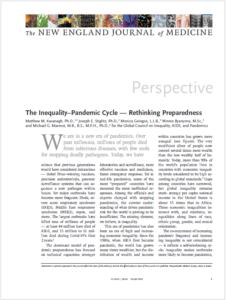
Analysis in the New England Journal of Medicine – co-authored by experts including Nobel laureate Joseph Stiglitz, leading epidemiologist Professor Sir Michael Marmot, and Chairperson of the One Economy Foundation and former First Lady of Namibia Monica Geingos – finds economic inequality, not conventional preparedness, has been the clearest predictor of how countries fared against pandemics, upending traditional assumptions about what actions governments need to take for health security. The new research from the Global Council on Inequality, AIDS and Pandemics finds that while technical capacity remains necessary, it is not sufficient. To respond to and prepare for pandemics effectively, governments need to include efforts to address inequality.